Beethoven 9 at the BBC Proms
July 20 2026This is our first experience of the BBC Proms, and it’s also the first of three consecutive nights of great classical music in London. The program has Gianandrea Noseda conducting the BBC Philharmonic Orchestra and Philharmonia Chorus. They are playing Bach’s Fantasia and Fugue in G minor BWV 542, Jessie Montgomery’s These Righteous Paths with cello (and vocal) soloist Abel Selacoe, and concluding with the old stand by of Beethoven’s ninth.
I’ve always wanted to attend the BBC Proms. As a kid, I would always listen to classical music on NPR, and I remember this part of summer being particularly rich because we would sometimes get the live broadcast feed from the BBC Proms. I was vaguely aware that it’s a summer music festival, but I didn’t realize just how many concerts they do (almost daily for 3 months) and how many different orchestras visit (more than 50).
I’ll first remark on Royal Albert Hall. It’s located in South Kensington, just a few blocks from where we are staying. This is a great neighborhood, just south of Hyde Park, with classic, picturesque London housing. The street we are staying on looks straight out of Mary Poppins or Paddington. Royal Albert Hall is part of a campus that is right next to the Natural Science and Natural History museums. What distinguishes it is it’s almost a completely circular dome. You can enter or exit from pretty much any part of the circle, and the hall itself is also circular. The inside is a bit old and not very ornate like some other cocnert halls. But it was easy to feel all the history that had passed through, across dozens of years of BBC Proms performances. It also helps that they had pictures from many past performances lining the walls.
Rather than doing the traditional Proms experience of waiting in line for a standing room spot, we opted to get seats. The hall is pretty interesting for this. The entire ground floor and middle of the hall is for standing audience. The ones in front will definitely get a pretty good view, albeit with the tradeoff of needing to wait in line longer. Also, I didn’t really want to stand for an entire 2+ hour concert.
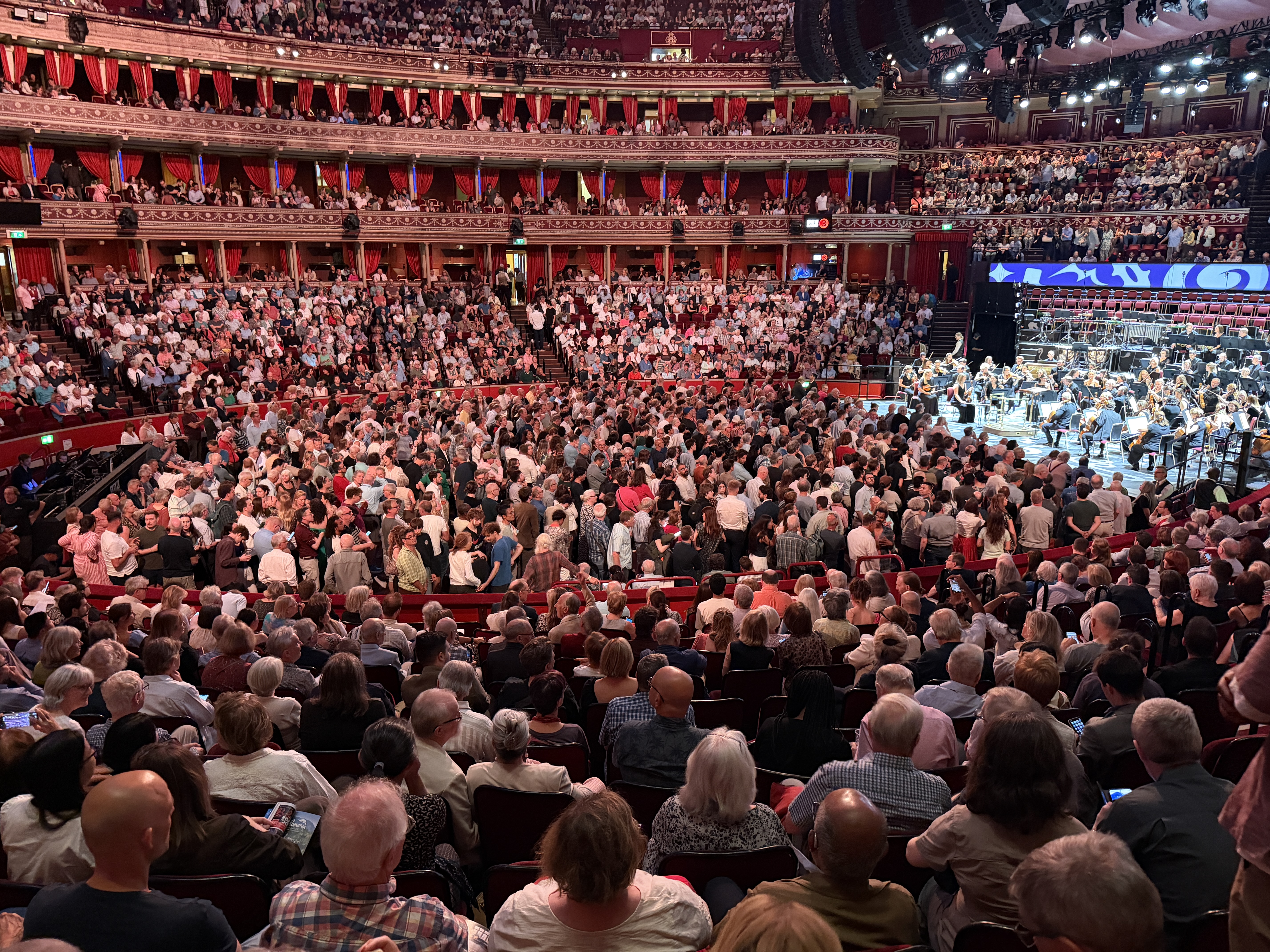
The concert started with the Bach. It came in two movements, with an introduction and then a fugue. It’s definitely a very Bach-like fugue. It was nice, but definitely just there to start off the concert and whet some appetites.
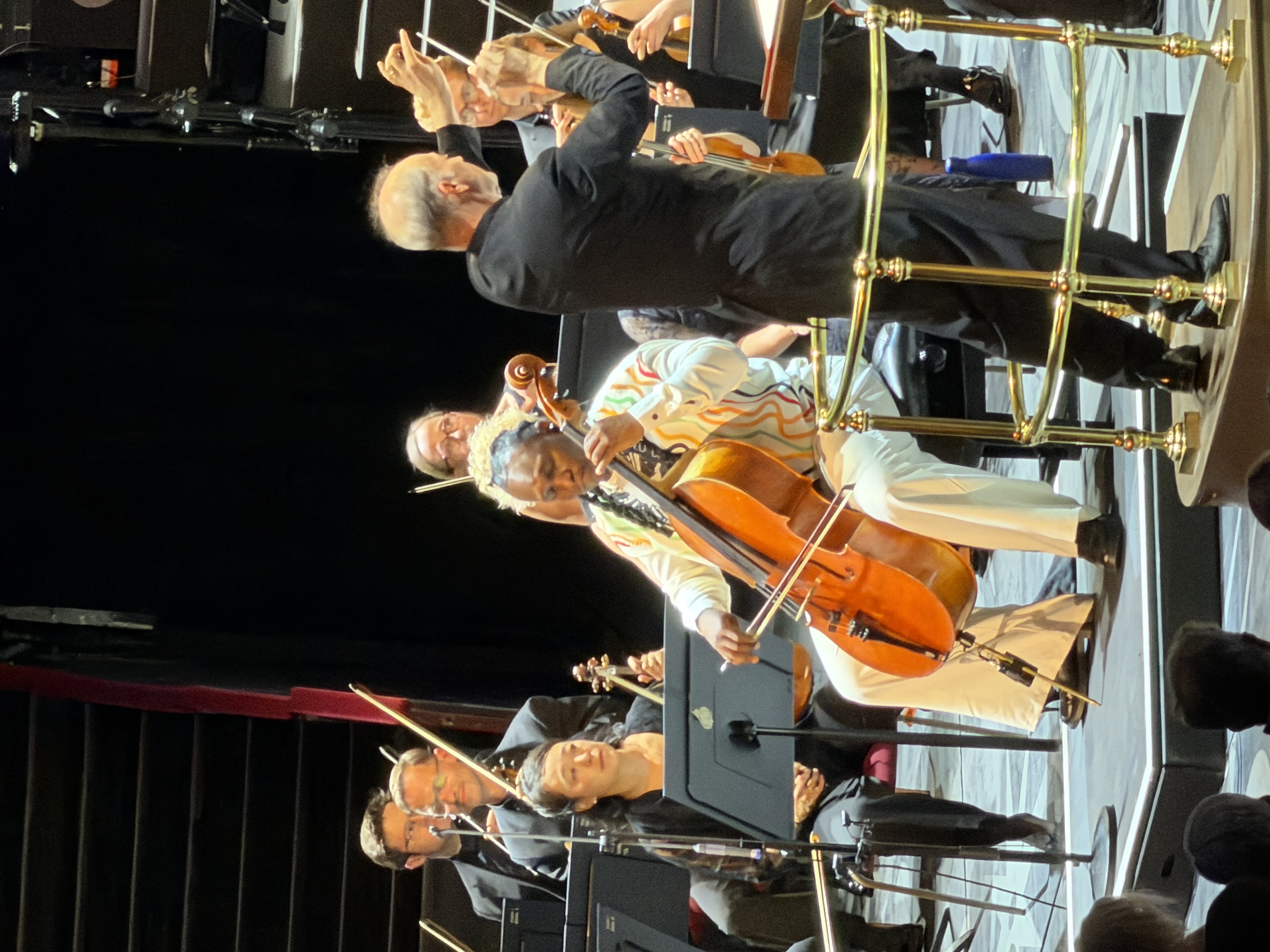
The next piece comes from contemporary composer Jessie Montgomery. I am not familiar with her work, nor that of the soloist, Abel Selacoe. His presence struck immediately. The piece is in three movements, and the first one starts off calmly and slowly. We could hear him playing some long singing lines on the cello, when all of a sudden, he started singing, in this beautiful and full falsetto voice. The voice is just as big of a part of the piece as the cello solo line, and Selacoe was able to weave both together in a seamless manner. I never knew I needed a duo of cello and voice, but it’s a great combination, and here we have it in one soloist. The rest of the piece was all pretty similar, but it was an overall ethereal mood that really makes it unique. I will endeavor to seek out more of Montgomery’s music and see what else I’m missing.
The highlight of the concert came next, and no, it’s not Beethoven’s ninth. Selacoe deigned to play an encore for us, and he explained that he wanted to play something that is both improvisatory and takes inspiration from his South African heritage. Like before, he used both his cello and his voice. He started by himself, as is typical for an encore. But after a little while, he played the same bass line a few times in a row, and indicated to the low strings to join him, repeating the bass line. After that, he slowly built out a few more lines using the rest of the orchestra, until finally, he had the audience singing with him. The encore turned out to be a group participation event, with Selacoe leading and directing. It was lovely and fun. When he finally indicated to us that it was time for the piece to steadily die away, there was a silence that filled the halls, until massive cheers erupted. I’ve attended a lot of classical music concerts in my life, and I can honestly say that this experience is unforgettable.
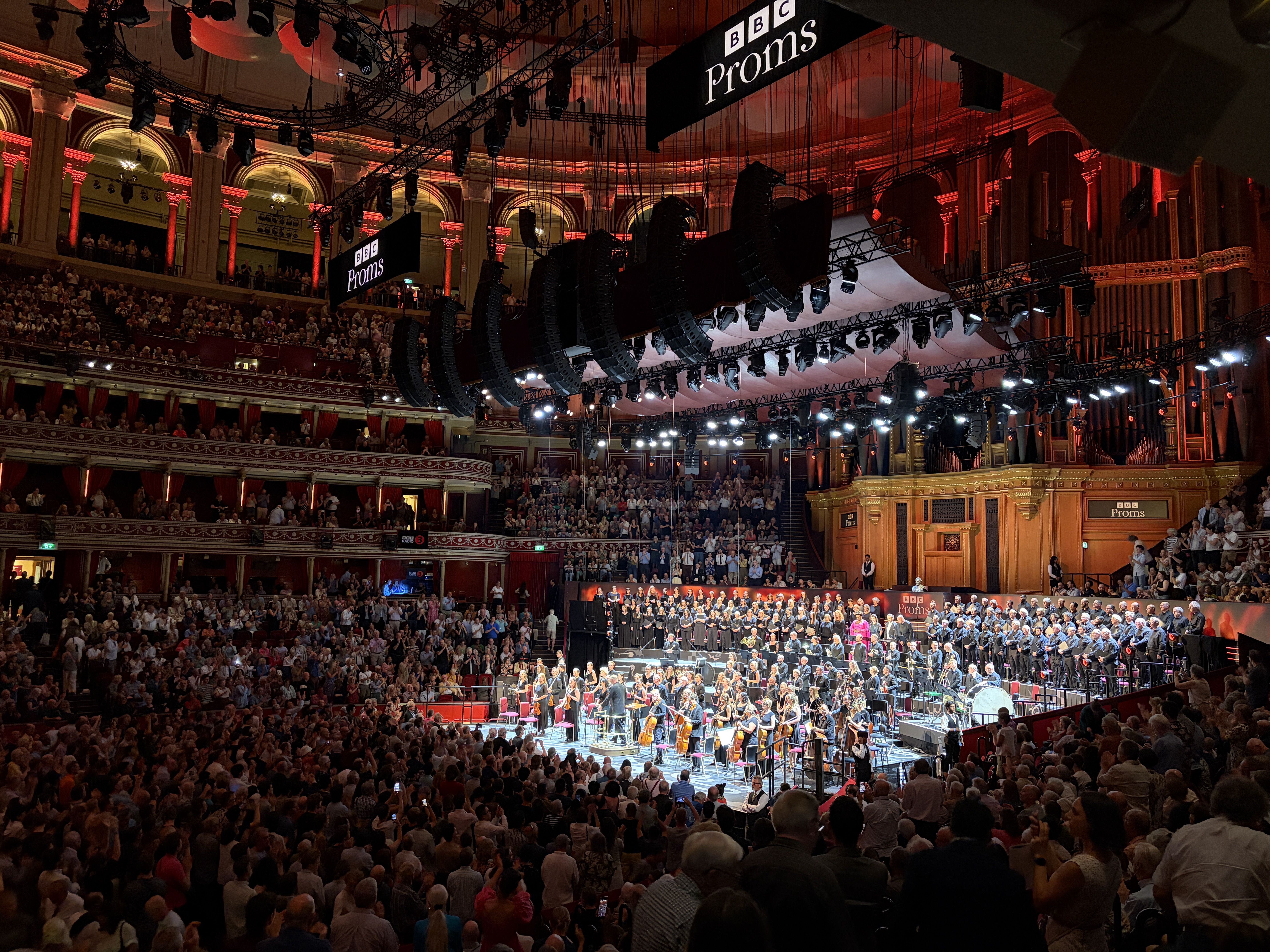
After intermission, we ended on the Ode to Joy. There’s not much I can say about this piece. It’s an audience favorite, probably the single most frequently performed piece in all of the orchestral literature. It’s still wonderful to experience in person, and to be reminded of my utter familiarity and adoration for Beethoven. Leonard Bernstein said that Beethoven’s music is inevitable. There is a quality about Beethoven that once you hear his music once, it has a way of staying with you forever. And when you hear it again, it’s as if you are re-acquainting yourself with a long lost friend. I’ve probably heard this piece more than a thousand times in my life, but there is still joy in retracing it and being on the arc of the musical journey. The piece ended with the great D major finish, and the crowd reacted with glee and contentment.
comments powered by Disqus