La bohème with the Royal Opera
July 21 2026We saw Puccini’s La bohème with the Royal Opera as the middle show in our three concerts in three days set in London. I am a longtime lover of Puccini, especially Tosca and La bohème. This opera is a perennial audience favorite, both for its romantic music, the soaring arias, and the sad story. Seeing this opera didn’t really break any new ground for me, but it was still good to be reminded of how nice it is to watch a great opera executed really well.
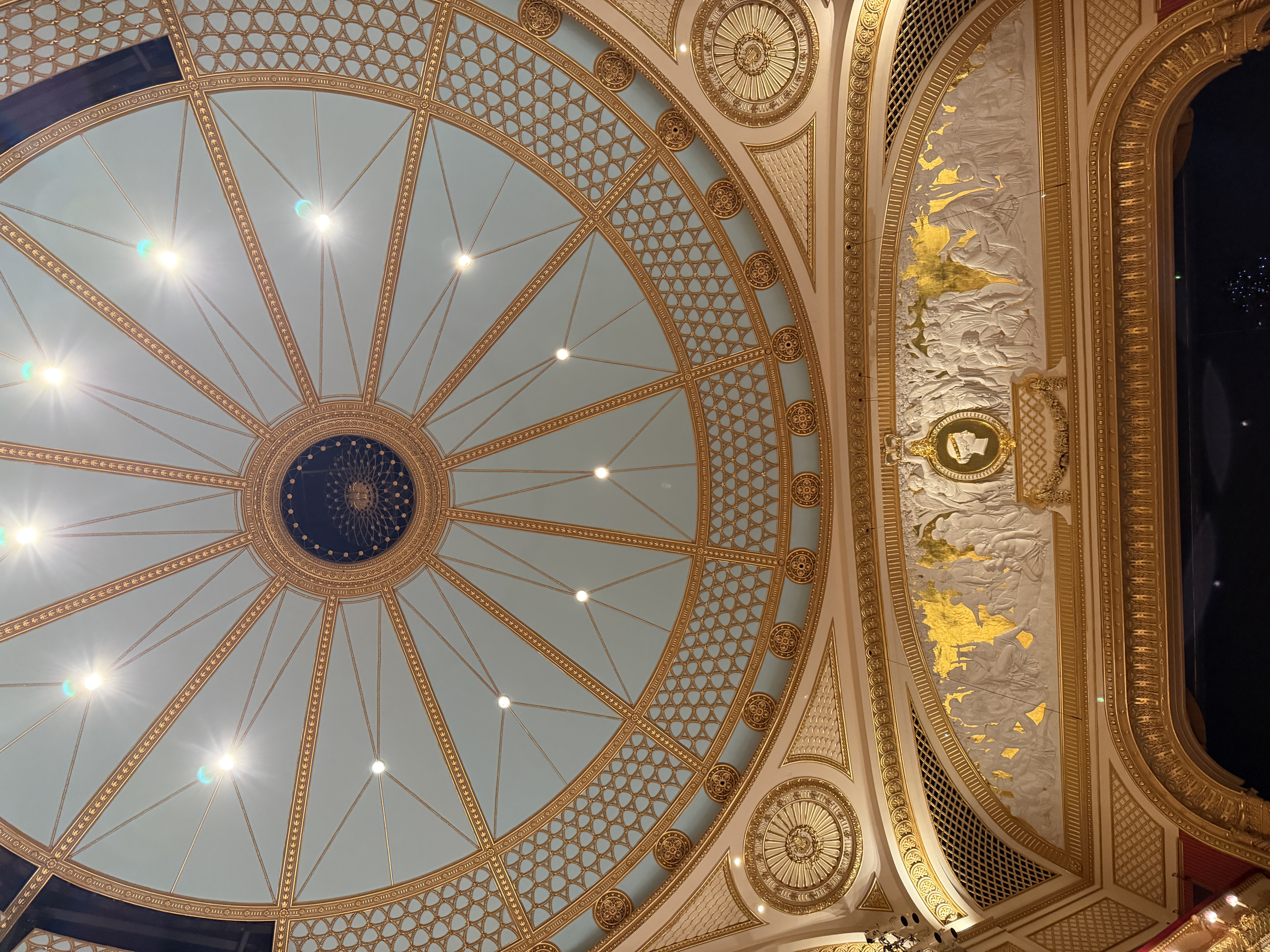
First, I have to comment on the Royal Opera and Ballet hall. It is one of the most gorgeous venues I’ve ever seen. It has ornate detail within, and the entire place feels cozy. I actually noticed the acoustics and singing also felt a little boxed in, like the sound didn’t travel very well. But I came to really love that, as it made the show seem more present, with the performers almost talking to you, rather than singing in some big arena. I noticed that there were no alcoholic drinks (or perhaps any drinks?) allowed, which I hadn’t experienced in London yet (we regularly had beers and wine at the West End musicals and at the BBC Proms). I actually like that policy, because the hall right now seems so perfect and idyllic that I wouldn’t even want the possibility of someone spilling beer all over a seat.
La bohème’s story and music arc are somewhat odd in that there is no arc, it just all goes in one direction. The first act is the happiest and most comedic, with Rodolfo and Mimi meeting each and immediately falling in love. It kind of moves very quickly after that, with Mimi getting worse in her illness, the two separating, before finally reconciling on Mimi’s deathbed. There are three arias in succession in the first act which I sometimes will just play on a loop. It’s Rodolfo’s intro, Mimi’s intro, and then a duet where they profess their love for each other. I feel like these three arias are almost like staring into the sun. The music and melodies are pure. Puccini unapologetically gives the audience what they want. The leitmotifs from these three arias recur throughout the rest of the opera, but it’s more muted, more like viewing the sun through clouds, or through sunglasses, or during a sunset.
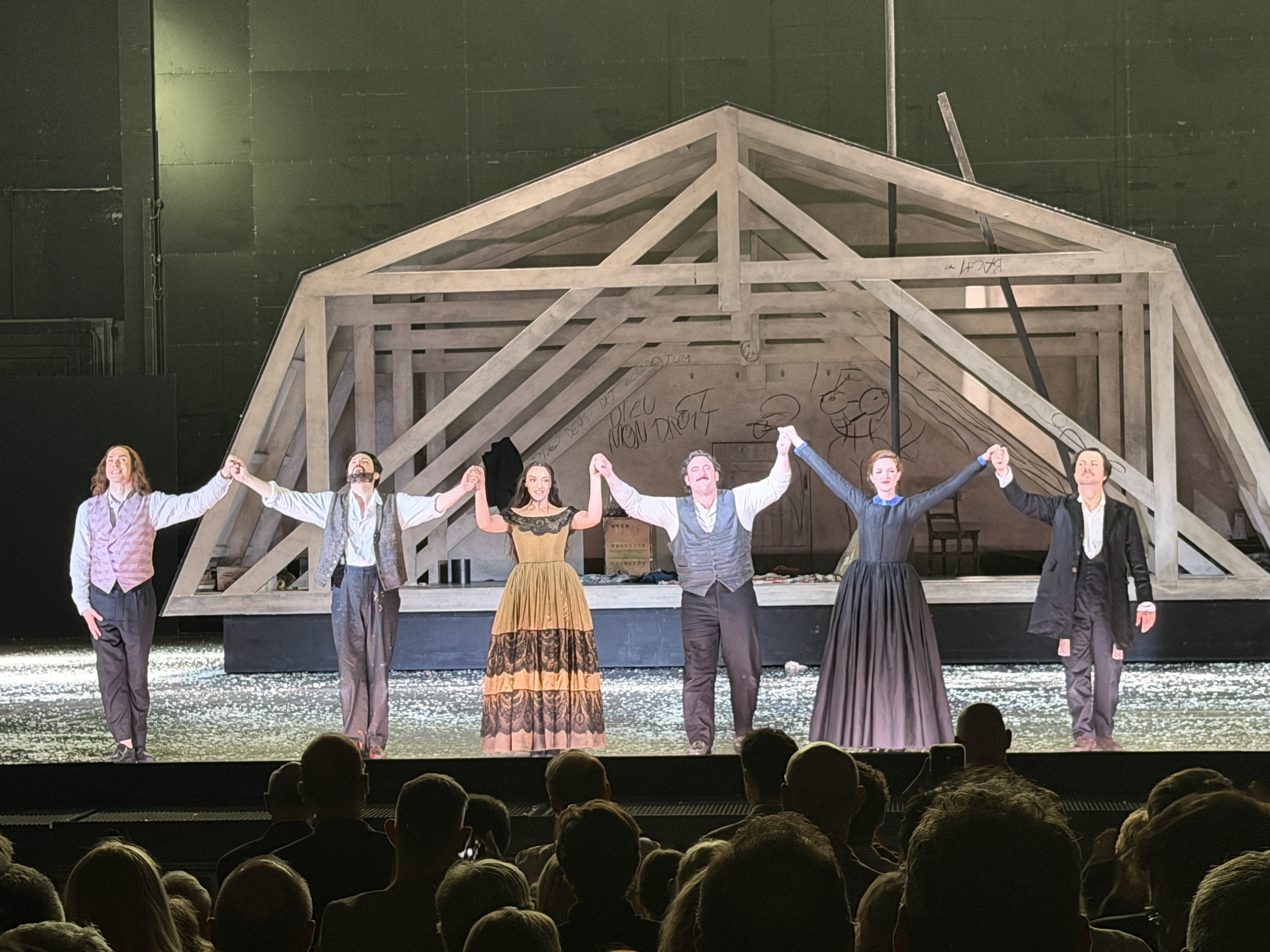
The cast had Juliana Grigoryan as Mimi, Freddie De Tommaso as Rodolfo, Luca Micheletti as Marcello, and Marina Monzó as Musetta. I thought they were all wonderful, although Monzó steals the show as Musetta. That is, of course, a big and showy role, but Monzó felt even extra showy, almost like she was born to be Musetta. Grigoryan was great in her acting as the demure Mimi, but I felt she struggled a bit with intonation during some of the big arias.
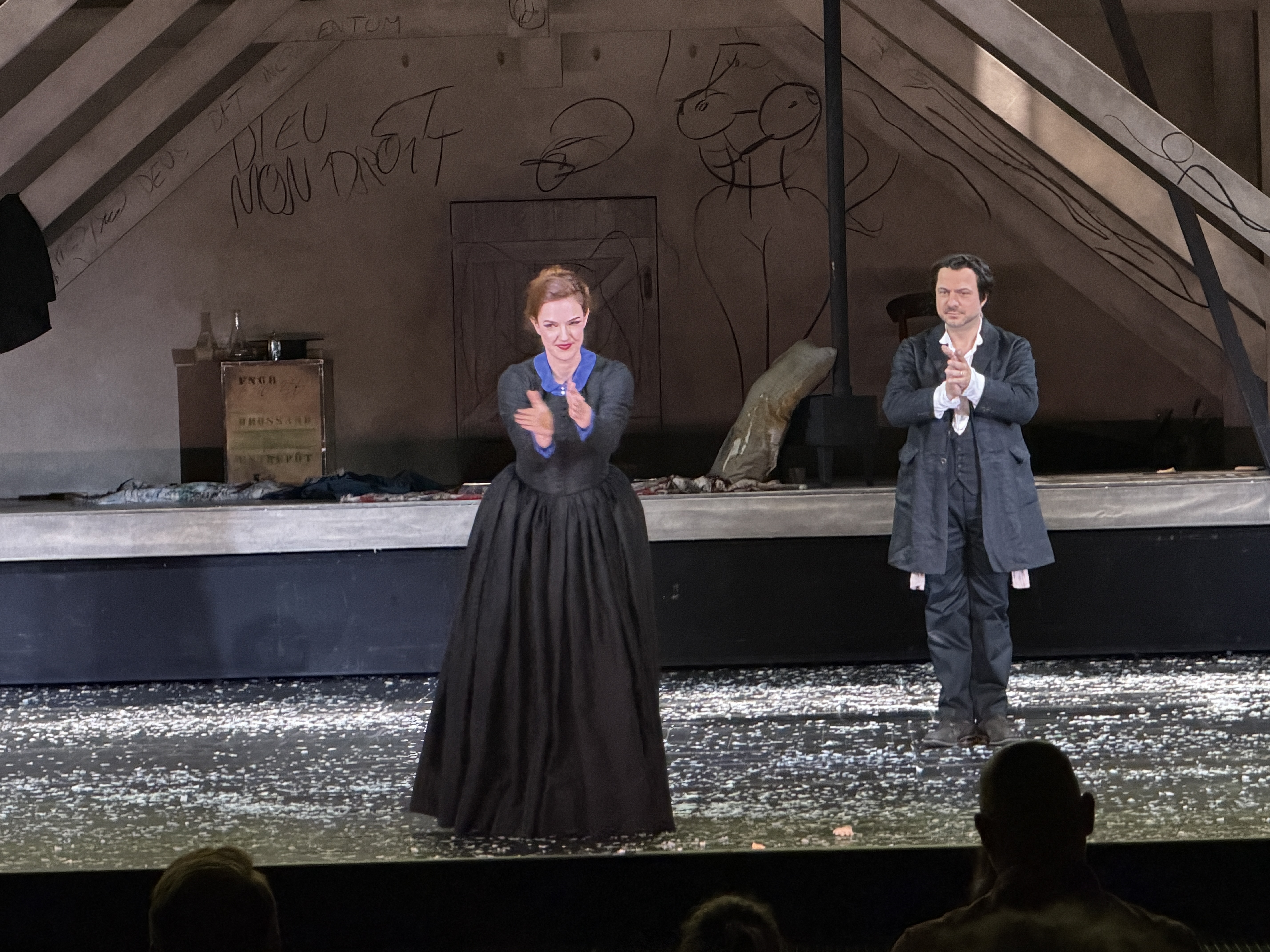
It had been a while since I last saw an opera live, and I was reminded at just how much talent and skill goes into performing something of this magnitude. The sets and costumes looked so good. The singing was generally superb, and I often could feel the sound vibrations hit me when the performers were belting out their arias. I was also very impressed with the quality of the orchestra (conducted by Lorenzo Passerini). The sound quality was good, and they navigated some really tricky sections and tempo changes really well. I would imagine that the musicians in a high level opera orchestra like this have probably played La bohème hundreds of times, but it never felt stale to me. The Royal Opera is one of the best opera houses in the entire world, so all of this is to be expected, but it’s still delightful when reality actually meet expectations.
Ultimately, the opera ends on a sad note, as Mimi dies. When I first learned of the opera as a teenager, it took me an embarrassingly long time to realize that the titular “La bohème” is actually Mimi. This opera has themes around love, being young, and living the bohemian artist life, but it is ultimately about the tragedy of Mimi herself. She has an illness that she simply cannot afford to treat, and no love, whether for Rodolfo, for her friends, or for life, is enough to combat that harsh reality. During the opera, we experience the peaks of romanticism, both in seeing the possibilities of love and joy, and in the depths of death and loss.
comments powered by Disqus