Mahler 6 at the BBC Proms
July 22 2026This is the last of three concerts in three nights that my wife and I are seeing in London, and the second BBC Proms concert. The anchor for this one is Mahler’s epic sixth symphony, the tragic one where the hero undergoes several trials, ultimately resulting in death. Interestingly, across three days, we went from the highest of highs (the conclusion of Beethoven’s Ode to Joy) to two consecutive lows (Mimi’s death in La Boheme and this sixth symphony).
The orchestra this evening is the BBC Symphony Orchestra, conducted by Sakari Oramo. The first half is very short due to the monumental length of the Mahler, with just one piece, Stele by György Kurtág. Stele is a roughly 15-minute modern piece. The piece is characterized by dissonance and half tones. Often, it sounds like notes are deliberately being played out of tune. I didn’t really enjoy the piece. It was very meandering and didn’t seem to have much structure. There weren’t really any melodies present, and in fact it often sounded like a progression of dissonant chords.
The Mahler followed. The sixth symphony is my third-favorite Mahler symphony, after the ninth and second, but it is one I almost never actually listen to. It’s simply too daunting, both in length and in personality. There are four movements, but the first and last movements are almost the length of an entire Mozart symphony. The piece is sometimes referred to by the nickname Tragic, and it is indeed unrelentingly tragic. Three of the four movements are either depressing or despairing. The fourth one, the Andante moderato, is hauntingly nostalgic, and it’s my favorite one.
I love the symphony so much because of its intensity, the epic scale, and the sheer beauty of the music. It’s also very Mahlerian, both in the type of music and the story. The music itself straddles that line between highly romantic and highly modern. The story is that Mahler wrote this depressing piece during the happiest period of his life, when he was thriving both professionaly and in family. He was obsessed with death, particularly his own. It’s hard not to conclude that he was, in a way, presaging his own premature death.
One meta point in seeing it live is that it never once felt boring. We recently saw Christopher Nolan’s epic movie The Odyssey, and I definitely felt that the movie dragged at times and I would look at my watch to figure out just how much of the movie was left. I never once did that here for the Mahler.
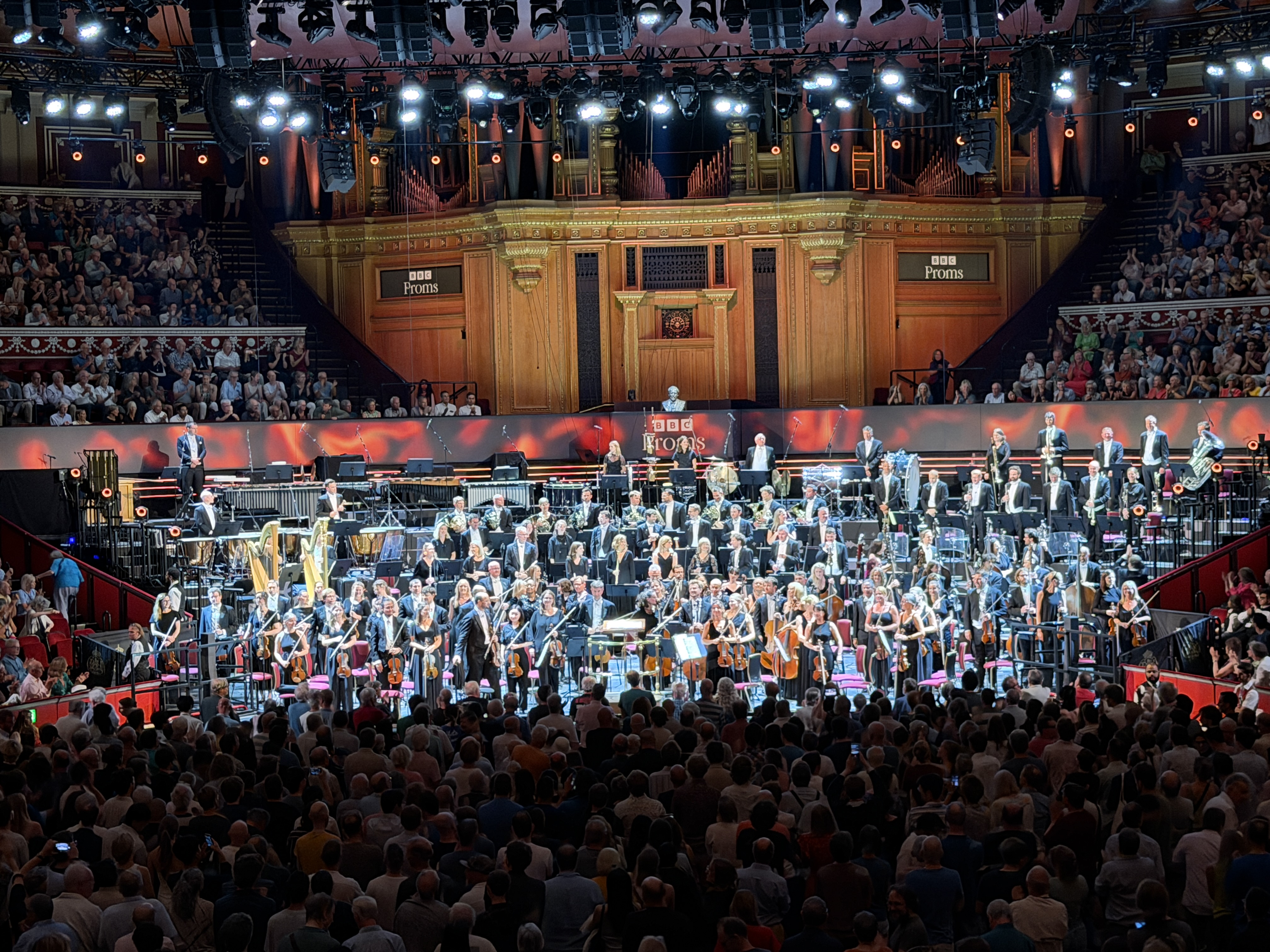
The performance was good, but not outstanding. I’m not that familiar with the BBC Symphony Orchestra, although I’m sure I have many of their recordings, just like the other London-based orchestras. There were a few notable slips of tone and intonation in solos, particularly among the French horns, tuba, and trumpets. The orchestra mostly did well as an ensemble, although there were definitely times when the conductor, Oramo, and the orchestra were not completely aligned on the tempo. In the first movement, Oramo wanted to go very fast, and the orchestra did play at one of the fastest paces I’ve heard for this symphony. In contrast, the Andante was actually a little too slow for my taste, and I felt like they lacked momentum during some of the key climax passages.
There are two major conductor choices that need to be made for this symphony. Mahler never conclusively decided what the order of the middle movements should be (between the Andante moderato and a fast Scherzo). Oramo went Scherzo then Andante, which is also my preferred order. I like having the Scherzo immediately after the depressing first movement because it reinforces the central character of the symphony, reminding the audience that there is no reprieve coming. I also like having the Andante come later in the piece because it makes more sense to me in the story. To me, the Andante is about memory, and re-living childhood, but with the filter of adult understanding applied to it. It’s beautiful, but there is something not quite right about it. Having it right before the last movement makes it seem like the main character of the symphony is appropriately preparing themselves for the oncoming tragedy and finality of the last movement.
The other decision is two vs. three hammer blows. The hammer blows infamously represent major setbacks to the unnamed protagonist of the piece. Mahler originally wrote in three hammer blows, leaving no ambiguity as to the fate of the protagonist. He was superstitious, however, and he felt that keeping the three blows in would be a dark omen for his own life (which turned out to be accurate nonetheless), so he removed the final blow right before the premiere. Oramo kept all three hammer blows, and the execution by the percussionist was really good in my opinion.
The crowd really blew up right after the conclusion. In general, I’ve come to really appreciate the British audience in these classical settings. They are loud, and they know what they like.
comments powered by Disqus